

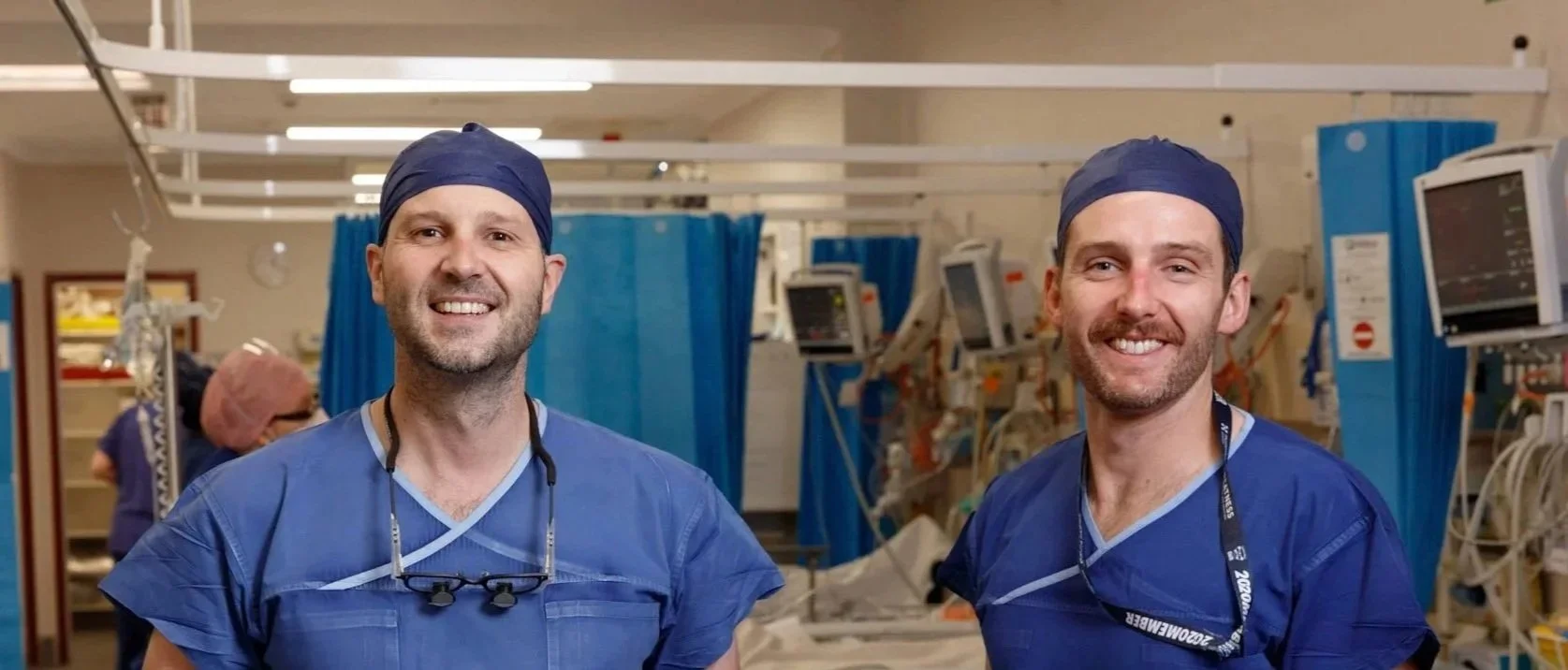
Dr Dan McCormick & Dr Jack Madden
Please watch this 3 minute video to help you prepare for your child's anaesthetic.

More Information
Please download this factsheet from the Australian & New Zealand College of Anaesthetists if you would like more information about paediatric anaesthesia.
Frequently Asked Questions…
-
This is a common situation. It is usually safe to proceed if they're at the tail end of the common cold.
Reasons to delay surgery are:
New chest symptoms (wheeze, cough, shortness of breath) or fevers.
They have other lung disease such as asthma or parental smoking in the home.
They have an infection that has not yet responded to medical therapy.
They may have a contagious condition that places healthcare workers at risk such as gastroenteritis.
If they were recently unwell and still have mild symptoms, it is best to present to hospital on the day of surgery to be assesed by your anaesthetist.
-
Your child needs to fast from solid food for six hours. For morning cases, this usually means no food after midnight. Afternoon cases may allow a light breakfast. The hospital will confirm the exact plan for your child.
Clear fluids are safe to continue until you arrive at the hospital. Water, apple juice, other clear juices, and electrolyte drinks are all okay. Anything cloudy, like milk or smoothies, is not considered a clear fluid.
-
Yes. One support person can come into the theatre and stay right up until your child goes to sleep. Once they’re asleep, our team will walk you back to the ward, and you’ll return to meet your child in the recovery room when they wake up.
-
Most children drift off to sleep breathing through a soft, strawberry-scented mask. Children over 5 may have numbing cream on their hands so I can place a small cannula prior to going to sleep. I’ll talk this through with you and your child beforehand.
-
They may look a little different or breathe in unusual ways as the anaesthetic takes effect. They will usually relax and become floppy. This is completely normal, but it can feel confronting if it’s your first time seeing it. We’ll be there to guide and reassure you.
-
It’s very common for parents to feel emotional at this point. We get it. Our team will understand and support you the whole way through.
-
One of the nurses will guide you back to the ward. I’ll stay with your child for the entire procedure, keeping them safe, asleep, and comfortable. I will place an IV cannula and a small breathing tube as needed for the surgery.
-
You’ll see your child in the Recovery Room (PACU) as they wake up. From their point of view, it often feels like you never left.
-
Yes. Many children are upset, teary, or unsettled for around 20–30 minutes. This is most common under the age of 6. This is usually the anaesthetic wearing off rather than pain. You can expect your child to be alert and hungry within about an hour of the surgery.
-
Some children feel a bit nauseated or may vomit. It’s usually mild, doesn’t harm the surgical site, and we can treat it if it happens.
-
Paracetamol and ibuprofen are normally all that’s needed, and should be continued regularly for at least a week. They can be given together or separately, at the doses written on the box. Days three and four can be a little more uncomfortable, so keep pain relief regular around then.
-
Once they’re fully awake, the icy poles will begin! If they’re comfortable, they can move on to light food. There are no restrictions around oral intake once your child is awake.
-
Awareness during surgery is exceptionally rare. I will take steps to avoid this from happening. The risk of awareness during surgery is less than 1 in 8000 cases.
If you would like more information on this, please ask me on the day of surgery.
-
In Australia, private patients often receive an out-of-pocket expense for their anaesthetic because the total fee for anaesthetic services can be higher than what is covered by Medicare and private health insurance. While Medicare and insurance will cover part of the cost, they don’t always cover the full amount. Anaesthetists, like other medical specialists, set their fees based on the complexity of the procedure, their level of expertise, and the time involved.
The gap between what Medicare and your insurance pay and the anaesthetist’s fee is called the "gap payment," and that’s where the out-of-pocket cost comes in. The Medicare and health fund rebates have lagged well behind inflation for the last 15 years, which is why most episodes of care will involved a gap payment.
You will receive information about any expected gap payments before your procedure. If you have any questions about your financial consent, please follow the contact details on the quote or invoice provided, or head to our “Contact” page.
-
You’re welcome to reply directly to the text message you received this video from, or head to our Contact page.
For urgent and serious concerns after hours, the Royal Hobart Hospital emergency department is your first stop.